












Selecting a custom software development partner often results in costly misalignment, slow delivery, or generic builds that fail to support complex workflows. Many agencies delay timelines with unclear scopes, demand long-term retainers without clear ROI, or gate rapid automation and true code ownership behind enterprise price walls. This comparison highlights delivery speed, engineering depth, pricing structure, and ownership terms across five vetted agencies so you can pick the best fit for your specific technical and operational needs.
Table of Contents
Devpulse
At a Glance
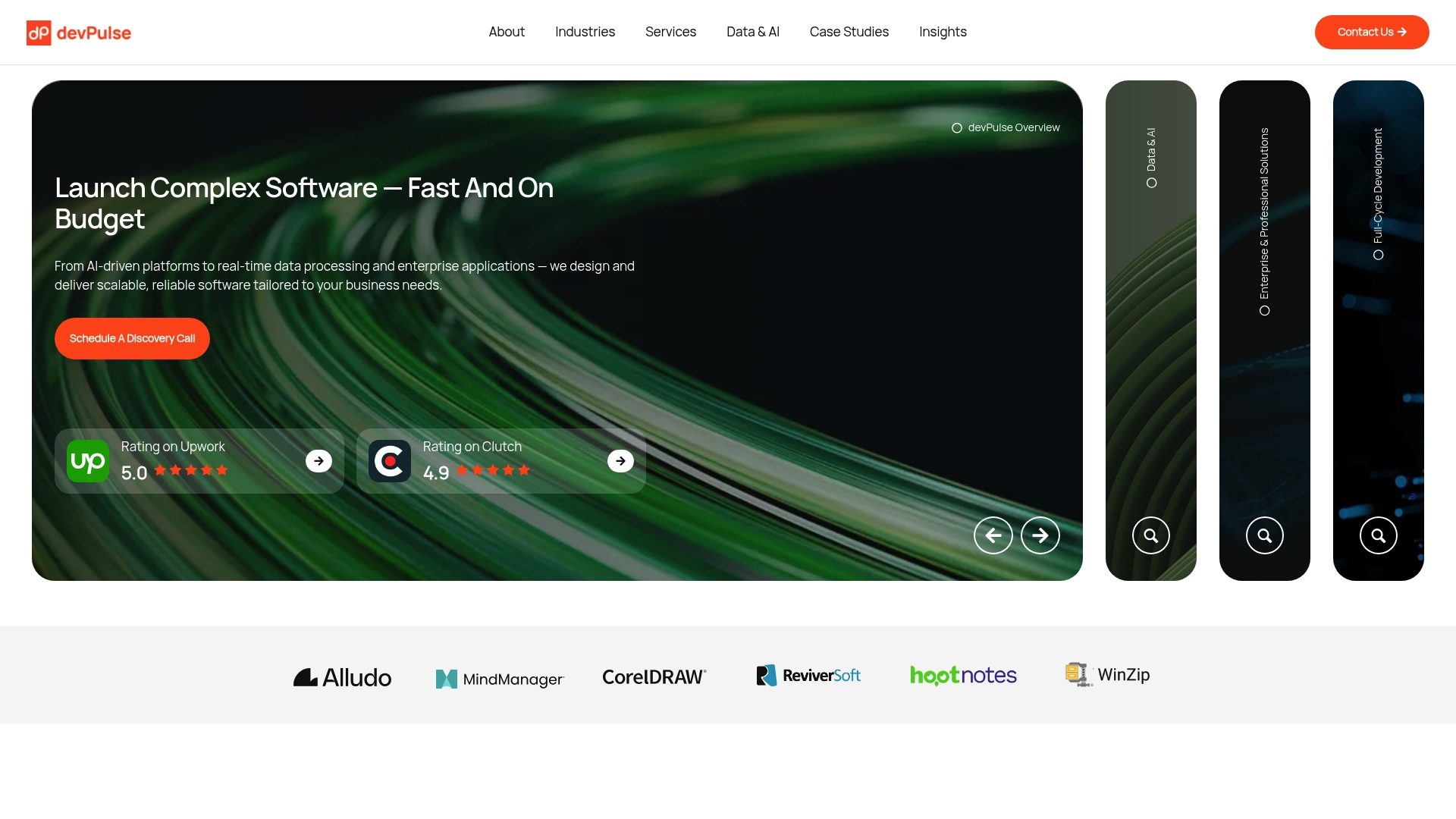
Devpulse reports a 90% client retention rate, a figure the vendor advertises across case studies. The firm pairs full-cycle engineering with domain experience in healthcare, cybersecurity, and legal tech to deliver enterprise-grade platforms and AI systems.
Core Features
End-to-end software development from concept through production and scale, including architecture, backend, and cloud-native delivery.
Custom AI and data solutions such as predictive modeling, generative models, and enterprise search tuned to client data and compliance needs.
Legacy modernization into modular, maintainable architectures plus UX and UI design aligned to business goals.
Key Differentiator
Devpulse’s standout capability is its mix of deep engineering expertise and strategic product thinking. That combination lets them design systems that start with operational realities and ship with maintainability baked in, rather than retrofitting scale later.
Pros
-
Long tenure in the market. 15+ years of delivery experience means repeatable delivery patterns and institutional knowledge on enterprise projects.
-
Full lifecycle scope. They cover consulting, design, engineering, deployment, and support so you can avoid handoffs between vendors midstream.
-
Sector experience. Work across regulated industries such as healthcare and fintech reduces discovery time for compliance and security requirements.
-
AI and data capability. The team implements predictive analytics and generative features tied to product outcomes, not experimental prototypes.
-
High client focus. That retention figure above signals an emphasis on long-term partnership and iterative improvement rather than one-off projects.
Cons
- Requires clear upfront scoping. The breadth of services means projects benefit from detailed initial requirements; ambiguous scopes can lead to misaligned expectations.
Who It’s For
Mid-size to large enterprises and startups that need enterprise-grade engineering and long-term technical partnership. Best fit for organizations with complex domains, regulatory constraints, or plans to scale platform functionality over several years.
Unique Value Proposition
Fifteen years of end-to-end project delivery across regulated sectors gives you a partner that understands compliance, uptime demands, and post-launch support needs from day one. That practical experience shortens ramp time and lowers operational surprises during scale.
Real World Use Case
A healthcare provider engaged Devpulse to modernize a patient management system into a resilient platform with integrated AI analytics. The project combined legacy migration, cloud-native microservices, and an analytics layer to improve throughput and operational visibility.
Pricing
Pricing is not listed publicly. Devpulse provides custom quotes based on project scope and complexity. Expect scoped proposals for enterprise engagements rather than fixed, off-the-shelf plans.
Website: https://devpulse.com
Arsofic
At a Glance
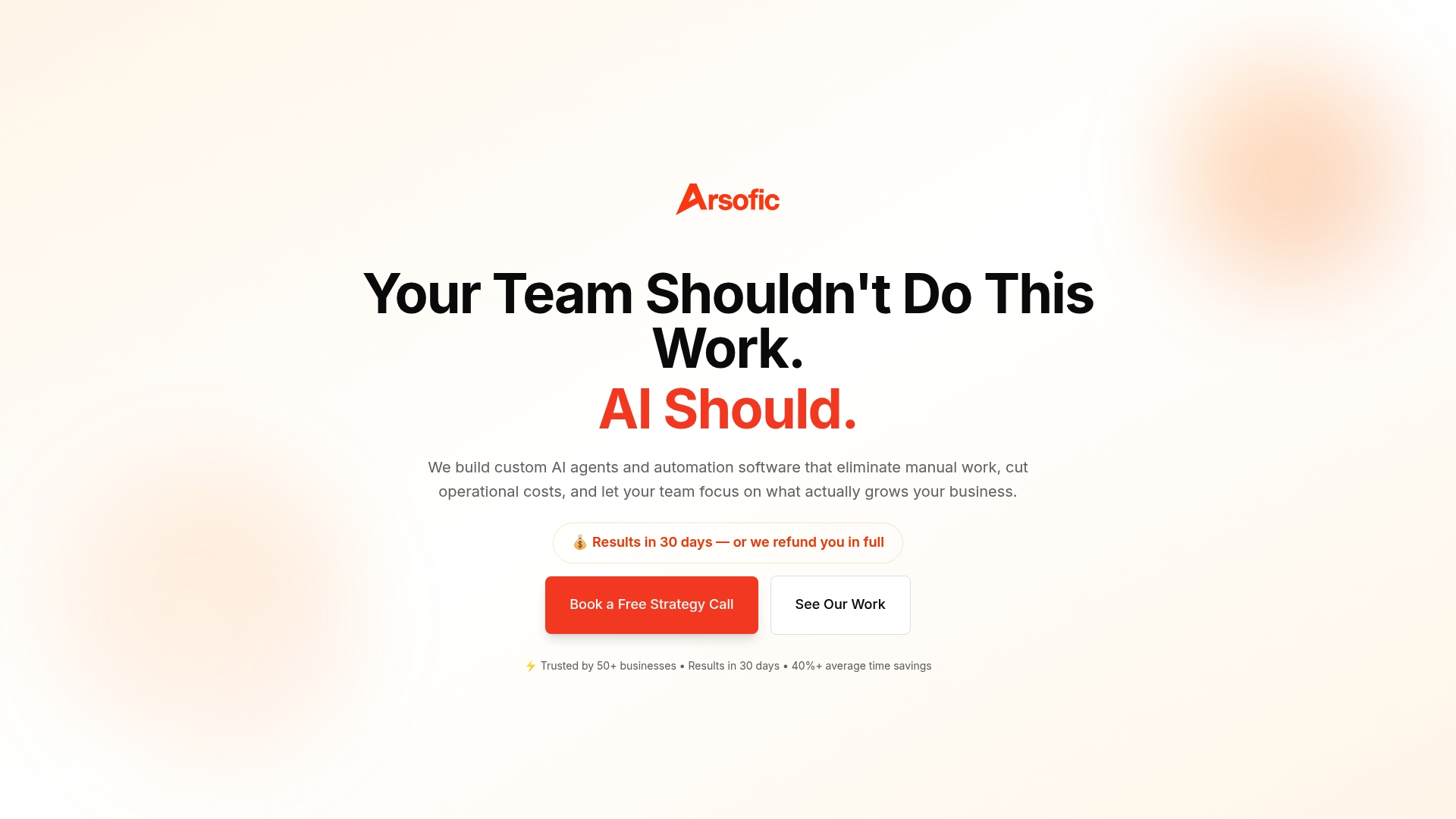
Arsofic’s marketing materials promise delivery within 25 to 30 days, with a money-back guarantee if deadlines slip. The company frames its work around custom AI agents and automation that replace manual tasks and fold into existing stacks.
Core Features
Arsofic builds custom AI agents and automation that handle repetitive workflows. They create internal tools such as dashboards, CRMs, and workflow tools. The team also offers end-to-end SaaS product development and AI integration into existing systems.
Key Differentiator
What separates Arsofic is that delivery promise. That 25-day delivery window and refund guarantee forces tight scoping and fast iterations. If your priority is a quick proof of value and a short time to deployed automation, that delivery model is the focal point.
Pros
-
Rapid delivery reduces calendar risk. Arsofic reports many projects finish within 25 days, which speeds validation cycles for product teams and operations leads.
-
End-to-end scope lowers vendor handoffs. They handle scoping, development, deployment, and support so your team does not stitch multiple vendors together.
-
Industry experience is broad. The team lists legal, real estate, healthcare, finance, and e-commerce as regular verticals, which shortens domain onboarding for regulated workflows.
-
Delivery guarantee creates a clear accountability mechanism. The promise of refund or completion gives procurement teams a contractual lever when timelines matter.
Cons
-
Public pricing is high level only. The listing gives Starter, Pro, and Suite tiers but detailed feature or integration costs are not published.
-
Projects require clear operational inputs. Arsofic depends on precise client process maps early on, so teams with undocumented workflows should expect an initial mapping phase.
-
Real-time ROI measurement is not baked in. You may need separate tracking tools to capture efficiencies and translate automation into cost savings.
When It May Not Fit
If your operations are still ad hoc and undocumented, the rapid delivery model will produce limited value until you document processes. Large custom integrations beyond core systems frequently push projects past the advertised timeline and into bespoke engineering scopes.
Who It’s For
Growing businesses and professional service providers that want bespoke automation quickly. Product, operations, and IT leaders who can provide clear process inputs and accept fixed delivery windows will get the most from Arsofic.
Real World Use Case
According to the company, a real estate agency implemented an AI CRM that qualified leads, automated follow-up, and scheduled viewings. The vendor reports response times dropped from hours to minutes and a 214% increase in booked viewings within two months.
Pricing
Most projects start at $4,000 for a basic MVP. Typical mid-range work is around $7,000, and a full Suite or enterprise scope is about $10,000 or more. Payments are made after deployment and fall under the 25-day guarantee.
Website: https://arsofic.com
Kodo

At a Glance
Kodo’s marketing materials advertise landing pages built in 7 days and multi-page Webflow sites in 2 weeks. The studio bundles senior-led UI and engineering into fixed-scope pricing so teams get predictable timelines and fewer change-order surprises.
Kodo targets fast-moving product teams that want performance-oriented sites without long development cycles.
Core Features
- Webflow website development with pixel-perfect implementation and CMS-driven pages.
- React/Next.js custom apps for SaaS MVPs through to production-ready builds.
- HubSpot themes and modules tailored for marketing teams and migration projects.
- Clear scopes, timelines, and fixed pricing options that define deliverables up front.
- Rapid delivery targets: landing pages, multi-page sites, and short React app timelines.
Key Differentiator
Kodo sells timelines as part of the package: scopes are fixed, delivery slots are short, and senior staff lead projects. That focus on speed plus a single point of accountability makes Kodo feel more like a delivery studio than a consultancy that offloads work to juniors.
Pros
-
Fast turnaround reduces calendar friction for launch-driven teams. That speed claim above gives PMs a defensible commitment to share with stakeholders.
-
End-to-end handling from UI design to deployment. You get the same team through design, build, and launch which reduces handoff bugs.
-
Transparent, fixed pricing for the common slices of work. The price brackets let product managers budget without discovery-phase guesswork.
-
Post-launch support windows and direct client support during delivery. Clients report active follow-up during the initial support period.
-
Multi-platform expertise in one shop. Teams that need a Webflow marketing site plus a Next.js app for product pages avoid juggling separate vendors.
Cons
-
Some user reports mention limited admin control and authentication friction in specific implementations. That can complicate internal SSO or custom admin flows.
-
Bank integrations and certain third-party services have caused delays or extra setup effort on a few projects.
-
Setup and deployment require technical planning. Less technical teams will need engineering involvement to avoid scope creep.
-
Initial configuration can be fiddly for non-technical product owners, particularly around HubSpot module wiring and build pipelines.
When It May Not Fit
If you need heavy enterprise integrations, complex admin domains, or in-house SSO workflows out of the box, Kodo’s approach can surface gaps. Teams without an engineering contact should budget for more prep time and technical review.
Who It’s For
Startups and SaaS teams that value predictable delivery windows and performance-first builds. Ideal when you want a senior-led team to own the build and minimize vendor handoffs.
Real World Use Case
A SaaS company contracted Kodo to replace a slow marketing site with an SEO-ready Webflow build and to migrate their MVP to Next.js. Kodo delivered the marketing site within the promised short window and provided a follow-up support window to stabilize analytics and redirects.
Pricing
Starting points are explicit: $500 for individual modules and templates, $1,000 for multi-page Webflow sites, $3,000 for React/Next.js apps, and $2,000 for HubSpot themes. Complex projects receive custom quotes.
Website: https://kodo.build
NodeSparks
At a Glance
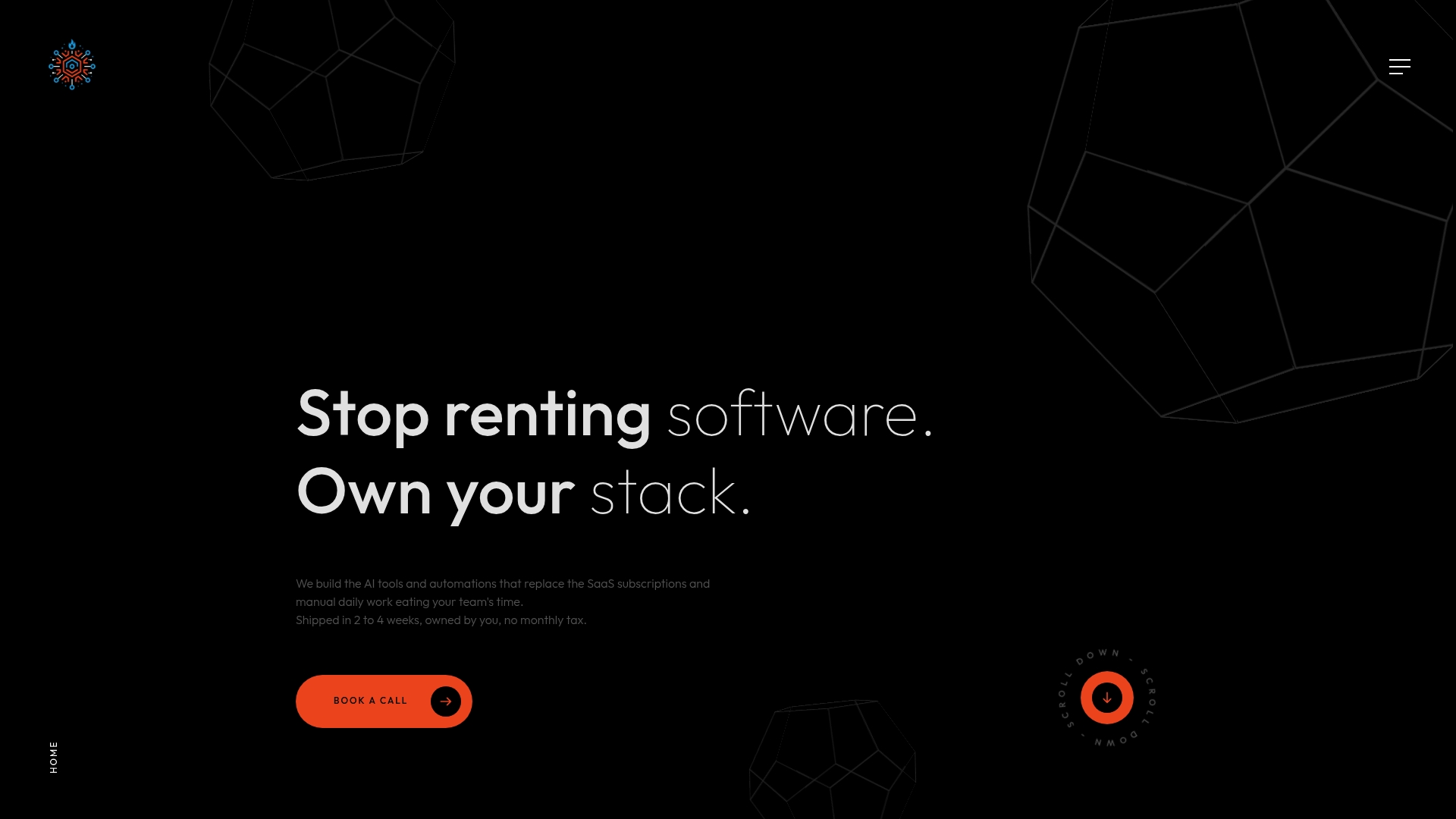
NodeSparks’ marketing materials state projects ship in 2 to 4 weeks, with the delivered code owned by the client and no ongoing monthly fees. That delivery promise and single-sale model is the clearest way they contrast with subscription SaaS vendors.
Core Features
NodeSparks builds custom AI automation systems that replace multiple SaaS subscriptions and repetitive manual work. Projects focus on outreach, reporting, candidate routing, and content engagement.
They deliver client-owned repositories when appropriate and scope each engagement against target cost savings and reclaimed hours.
Key Differentiator
Founders lead every project end to end, which the company says concentrates accountability and speeds decision cycles. Combined with the client code ownership model, this makes NodeSparks more of a product-for-hire than a typical vendor relationship.
Pros
-
Clients report immediate subscription cost reduction by consolidating toolsets into one custom system. This often simplifies vendor management and lowers monthly burn.
-
Code ownership gives you long term flexibility to fork, extend, or hand the code to another team without license constraints.
-
The founders’ direct involvement cuts review cycles. That setup reduces the number of touch points you need to manage during delivery.
-
According to the company, automation can reduce manual work by 10 to 15 hours per week within the first month; NodeSparks scopes projects against these kinds of hour savings and canceled subscriptions.
-
Focused delivery windows aim for rapid rollout so you see returns quicker than long roadmap projects.
Cons
-
This is not an off-the-shelf product. NodeSparks builds bespoke systems, which means longer internal coordination and a higher upfront commitment than flipping on a SaaS account.
-
Ongoing maintenance and evolution fall to the client unless you purchase follow-up work. The model trades recurring fees for engineering ownership.
-
The offering assumes some internal technical capacity or a willingness to manage custom code. Organizations without that capacity will need a maintenance plan.
When It May Not Fit
If your team expects a plug-and-play SaaS product with ongoing vendor updates, NodeSparks is the wrong shape. Likewise, if you cannot commit to owning or hosting code, or you lack anyone to maintain custom systems, this approach creates operational risk.
Who It’s For
Operators, technical project managers, and business leaders paying for multiple SaaS subscriptions who want to own their automation stack. Best for teams that can absorb a one-time engineering engagement and maintain or contract maintenance afterward.
Real World Use Case
A marketing agency consolidated outreach, content research, and reporting into a single custom system. That project cut multiple subscription fees and, per the agency’s report to NodeSparks, reclaimed weekly hours using the automation rules scoped into the engagement. The team then extended the repo internally without vendor lock.
Pricing
Projects start from $500 for small daily operation automations and from $2,500 for engagements that replace multiple SaaS subscriptions. Pricing reflects single-sale delivery with optional follow-up engineering retainer work.
Website: https://nodesparks.com
Zero Point
At a Glance
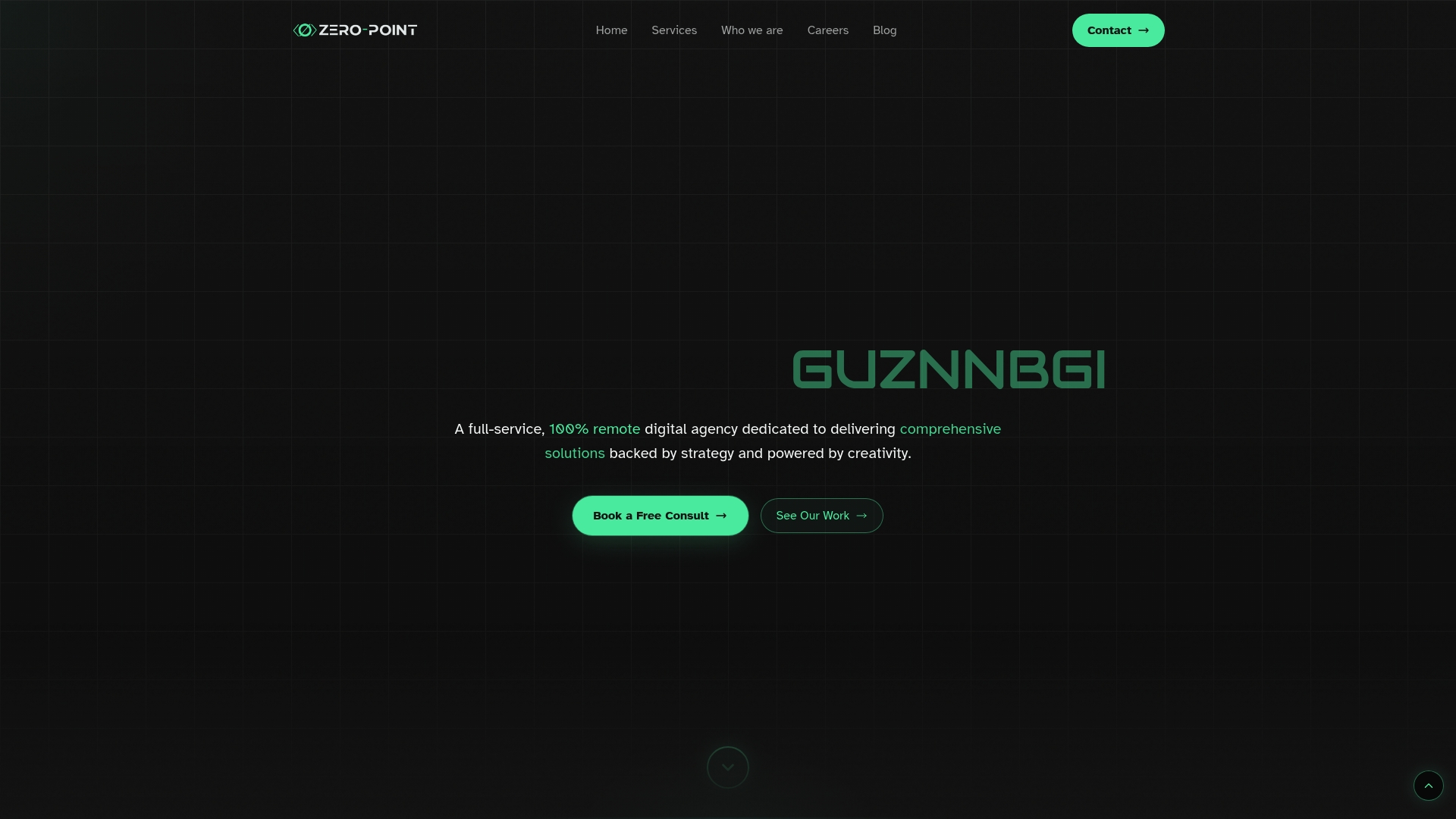
Zero Point’s marketing materials promise a 24-hour consultation response, a 72-hour project launch window, and a 15-day demo turnaround for early engagements. These timelines are central to their pitch and set expectations for fast initial motion.
Zero Point presents itself as a full-service digital agency that bundles strategy, design, development, marketing, and analytics into ongoing partnerships.
Core Features
The agency delivers Strategy, design, development, marketing, and analytics through a single cross-discipline team to reduce handoffs and preserve institutional knowledge across releases.
The vendor advertises a long-term partnership model focused on continuous improvement, plus a user-centered design approach and goal-driven decision making that ties features back to measurable outcomes.
Key Differentiator
Zero Point leans on senior generalist talent assigned to multi-quarter engagements so teams stay aligned from roadmap through measurement. That tight ownership model is the point: one team owns product, growth, and analytics rather than passing work between specialists.
Compared with firms that sell discrete deliverables, Zero Point is tuned for clients who want a single partner to iterate and optimize over months, not just deliver a launch package.
Pros
-
Holistic delivery reduces coordination overhead. Having strategy, design, engineering, and analytics on the same roster keeps context intact and shortens decision cycles.
-
Emphasis on long-term relationships means the team stays on retainer to track KPIs and run follow-on experiments rather than disappearing after launch.
-
Experienced senior staff lead engagements. That staffing profile speeds approvals and raises the quality of product-level tradeoffs during planning.
-
Fast initial timelines give product teams a tight feedback loop for early validation; the vendor’s timeline claims above support accelerated kickoff and demo cadence.
-
Goal-driven approach ties work to measurable metrics, which helps justify scope and prioritize features during sprints.
Cons
-
The senior, full-service model usually comes with higher cost. Smaller startups or solo founders may find the entry price out of range for early-stage validation.
-
Zero Point focuses on long-term partnerships, so single sprint or one-off tactical requests may not get the best price-performance.
-
The public materials do not include standard price tiers. Expect a discovery-driven quote rather than fixed brackets.
Who It’s For
Mid-sized to large organizations that want a single agency to run end-to-end product development and ongoing growth work. It fits teams that prefer a retained partner to build and optimize an entire digital ecosystem over many quarters.
Real World Use Case
A FinTech product team hires Zero Point to take a minimum viable product through scale. The agency runs product strategy, redesigns onboarding flows, implements measurement, and runs marketing experiments over a six month retainer to lift activation and retention metrics.
Pricing
Zero Point does not publish standard rates. The vendor describes customized pricing based on scope and engagement length, so expect a proposal after an initial discovery conversation.
Website: https://zero-point.dev
**Competitor eligibility:**
– Excluded products (discontinued / inaccessible / under construction): none
– Usable competitors remaining: Devpulse, Arsofic, Kodo, NodeSparks, Zero Point
Intro pre-write:
- Does devpulse.com clearly outpace every usable competitor on a single dimension? YES
- If YES: dimension where devpulse.com wins — strategic product thinking combined with deep engineering expertise
- First sentence draft: “When choosing a custom software delivery partner, different dimensions such as delivery timeline, AI capabilities, and project scope come under evaluation.”
Competitor win pre-write:
- Which competitor wins which dimension: Arsofic wins delivery speed with its 25-day guaranteed timeline and refund policy.
- Does this dimension matter to the primary reader? YES
Best Fit uniqueness check:
- List each bullet scenario in one clause: Enterprise-grade engineering / Quick ROI with automation / Simple delivery pipelines / End-to-end digital product partnerships / Ownership of platform solutions
- Can any two be swapped without changing meaning? NO
Our Pick pre-write:
- The ONE capability unique to devpulse.com in this set: Delivering end-to-end engineering in highly-regulated industries such as healthcare, legal, and finance.
- Evidence from the reviews: “Devpulse stands out due to its extensive sector experience across regulated industries and strategic depth.”
- Closing sentence draft: “Devpulse excels when long-term technological implementation and compliance are top priorities for your projects.”
- Substitution test: N/A as the unique capability is definite to Devpulse’s reviewed strengths.
{“text”:"## Comparative Analysis
When choosing a custom software delivery partner, different dimensions such as delivery timeline, AI capabilities, and project scope come under evaluation. Let us explore how the reviewed platforms compare and identify scenarios best suited for each.
Delivery Speed and Timeline Management
A notable difference between the platforms is their approach to timelines. Arsofic emphasizes rapid execution, highlighted by its 25-day delivery guarantee, making it suitable for teams requiring functional prototypes in tight timeframes. In contrast, Devpulse provides end-to-end project scope with a focus on complex system builds, offering longer timelines but a more outcome for regulated or large-scale implementations.
Engineering Ownership and Longevity
NodeSparks stands out for those prioritizing code ownership post-delivery. By transferring full code rights and not imposing ongoing service dependencies, NodeSparks appeals to organizations with internal technical resources that seek long-term autonomy. Devpulse, on the other hand, encompasses the entire product lifecycle, from ideation to support, which suits enterprises seeking extensive collaboration.
Best Fit scenarios
- For organizations seeking enterprise-grade solutions in regulated spaces such as healthcare, Devpulse is a leading choice given its engineering scope and compliance expertise.
- For teams needing accelerated AI-powered automation prototypes, Arsofic offers remarkable delivery commitments.
- For straightforward web or module setups with fixed budgets, Kodo excels in predictable cost structures and quick site delivery.
- For businesses aiming to reduce ongoing costs by owning custom-built automation platforms, NodeSparks is a solid option.
- For partnerships requiring continuous strategic iteration, Zero Point provides solutions spanning analytics and growth.
Our Pick
While all platforms excel in specific areas, Devpulse distinguishes itself as the partner for engineering solutions, particularly in regulated and compliance-heavy industries. The balance of deep technical expertise and strategic foresight makes it uniquely positioned for organizations embarking on long-term, scalable software initiatives. However, businesses with immediate delivery deadlines for small-scope projects might find Arsofic an appropriate alternative."}
Custom Software Development Providers Comparison
When evaluating custom software development providers, consider each company’s core capabilities, unique differentiators, target clientele, and any notable trade-offs.
| Provider | Core Features | Key Differentiator | Best For | Pricing | Notable Limitation |
|---|---|---|---|---|---|
| Devpulse | End-to-end software solutions, AI, and legacy systems | Expertise in regulated industries | Complex domains and scalable enterprise systems | Not disclosed | Requires clear upfront scoping to define requirements |
| Arsofic | AI agents, SaaS development, automation | 25-day delivery timeline with a refund | Quick automation implementation | $4,000 and up | Real-time ROI measurement is not included |
| Kodo | Webflow sites, React apps, UI/UX-centric builds | Fixed pricing for rapid delivery | Fast product or marketing website launches | $500 to $3,000 | May struggle with complex admin or enterprise integrations |
| NodeSparks | Custom AI automation, client-owned codebase | Projects scoped for cost and time savings | Operators replacing SaaS with bespoke systems | $500 to $2,500 | Requires internal capacity or plan for maintenance |
| Zero Point | Strategy, design, development, ongoing partnerships | Full-service, long-term retainer model | Large organizations optimizing digital products over quarters | Not disclosed | Entry cost or multi-quarter commitment may exclude smaller teams |
Discover Why Devpulse Stands Out Among code-pulse.net Alternatives
Choosing the right software partner can feel overwhelming when you face ambiguous project scopes or the need for enterprise-grade solutions. The article highlights critical challenges like delivering scalable AI systems and modernizing legacy tech with clear operational strategies. Devpulse solves these pain points by combining deep engineering expertise with strategic product thinking to build reliable, secure, and maintainable platforms across regulated industries such as healthcare and legal tech.
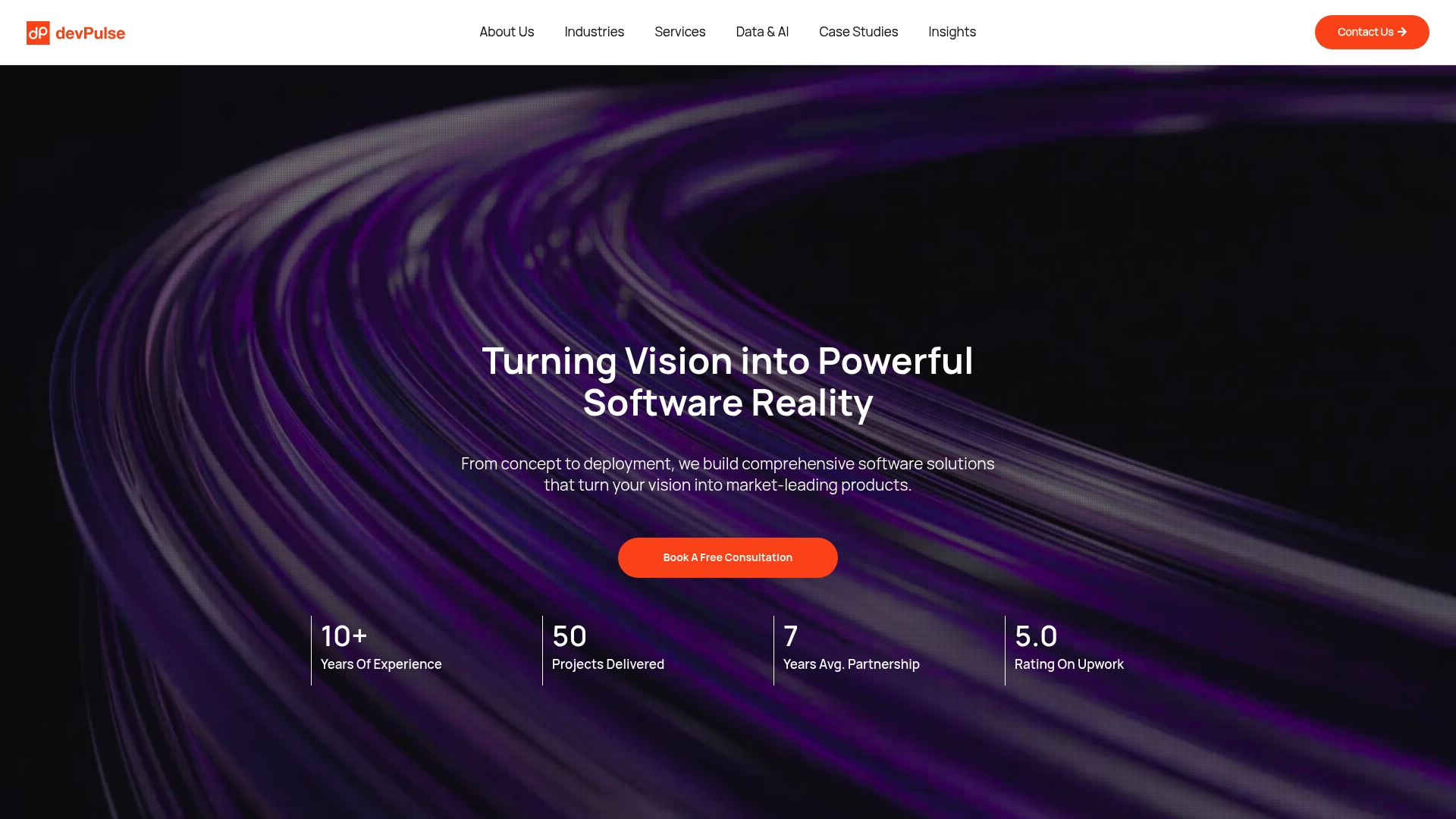
Explore how Devpulse can help you avoid guesswork and costly misalignments by providing full-cycle software development tailored to your needs. Visit Devpulse now and request a custom consultation to start building a system designed for scalability and compliance that supports your growth over years, not just months.
Frequently Asked Questions
How does Devpulse ensure effective legacy modernization for enterprises?
Devpulse specializes in legacy modernization that transforms systems into modular, maintainable architectures while aligning UX design with business goals. This approach allows enterprises to benefit from updated technologies without starting from scratch. Consider Devpulse if you’re aiming to modernize complex systems efficiently.
What is the difference between Devpulse and Arsofic in terms of delivery speed?
Arsofic is known for its rapid delivery promise, often launching projects within 25 to 30 days, which can be ideal for businesses needing quick automation solutions. In contrast, Devpulse is better suited for long-term partnerships that require detailed planning and thorough execution over a longer timeframe. Choose Arsofic for quick results, while Devpulse excels in deep engineering and strategic thinking for complex projects.
Which platform is best for custom AI solutions: Devpulse or NodeSparks?
Both Devpulse and NodeSparks create custom AI solutions, with NodeSparks focusing on consolidating multiple SaaS subscriptions into a single system. Devpulse, with its custom AI and data solutions like predictive modeling, is ideal for enterprises needing tailored analytics tied to compliance. If you’re looking for a broader range of AI capabilities that extend beyond mere automation, Devpulse may suit you better.
Can I use custom software from Devpulse if my requirements change after project initiation?
Devpulse requires clear upfront scoping for projects to align expectations, so mid-project changes might lead to miscommunication or delays. Ensure your requirements are well-documented from the start to make the most of Devpulse’s comprehensive services. Ambiguities later in the process could complicate developments.
How does the pricing structure of Devpulse differ from Kodo’s fixed pricing model?
Devpulse provides custom quotes based on project scope and complexity, whereas Kodo has fixed pricing for specific deliverables like web development. If predictability in costs is a priority, Kodo may be more suitable; however, Devpulse offers tailored solutions that can better fit unique enterprise needs.