








Web-Ready CAD: R&D for Digital Transformation
Expert Hours
Expert Team
Solution Approaches Evaluated
Client Background
Our client is a long-established global provider of integrated Computer-Aided Design ( CAD ) solutions tailored for manufacturing industries, with a strong focus on tooling, mold, die, and discrete part production. Founded in the early 1980s, the company has grown to serve customers across automotive, aerospace, medical, consumer products, and electronics sectors through an extensive international network of subsidiaries and resellers. Its software portfolio delivers end-to-end capabilities from design and modeling to CNC programming and production machining, helping manufacturers accelerate time-to-market, improve productivity, and reduce costs.
Success Metrics
Complicated problems demand clarity and discipline. We take scattered requirements, conflicting priorities, and partial information — and shape them into focused strategy and executable plans.

lignment with client digital transformation goals
faster understanding of architectural trade-offs
Let's discuss how we can help bring your ideas to life!
Got an idea but no one to implement it fast? Contact us and we'll get back to you within 24 hours.

Business Challenge
The client’s product ecosystem is built around mature, high-performance desktop CAD applications that have been successfully used by customers for many years.
While this architecture delivers robust functionality and stability, it creates natural limitations when adapting to modern, web-based delivery models.
Industry trends indicate a gradual shift toward web and hybrid CAD solutions, driven by increasing demand for accessibility, scalability, and modern deployment models. To remain competitive in the long term, the client recognized the need to evaluate how these trends could be addressed within its existing product strategy.
The key challenge was to assess a pragmatic and low-risk digital transformation path.
Evaluating technical feasibility, architectural constraints, and potential entry points into web technologies without disrupting the existing desktop product line or customer base.
Case attributes
Partnership period
October 2025
Team Composition
Expert Engineer
PM
Location
Europe
Platform
Web
Desktop
The Solution
To address the client’s challenge, we conducted an exploratory R&D phase focused on evaluating how complex, large-scale CAD functionality could be delivered in a web or hybrid environment. The research combined technical experiments, analysis of existing industry solutions, and architectural assessments aligned with the client’s long-term digital transformation goals.
As a result, several viable solution directions were identified and evaluated.
The Result
By engaging in the R&D phase, the client gained a clear, structured understanding of how its desktop CAD product ecosystem could evolve toward web and hybrid delivery models.
The research delivered a comparative evaluation of multiple architectural approaches, outlining feasibility, technical constraints, risks, and long-term implications.
This enabled objective decision-making around which directions were viable and which required significant trade-offs.
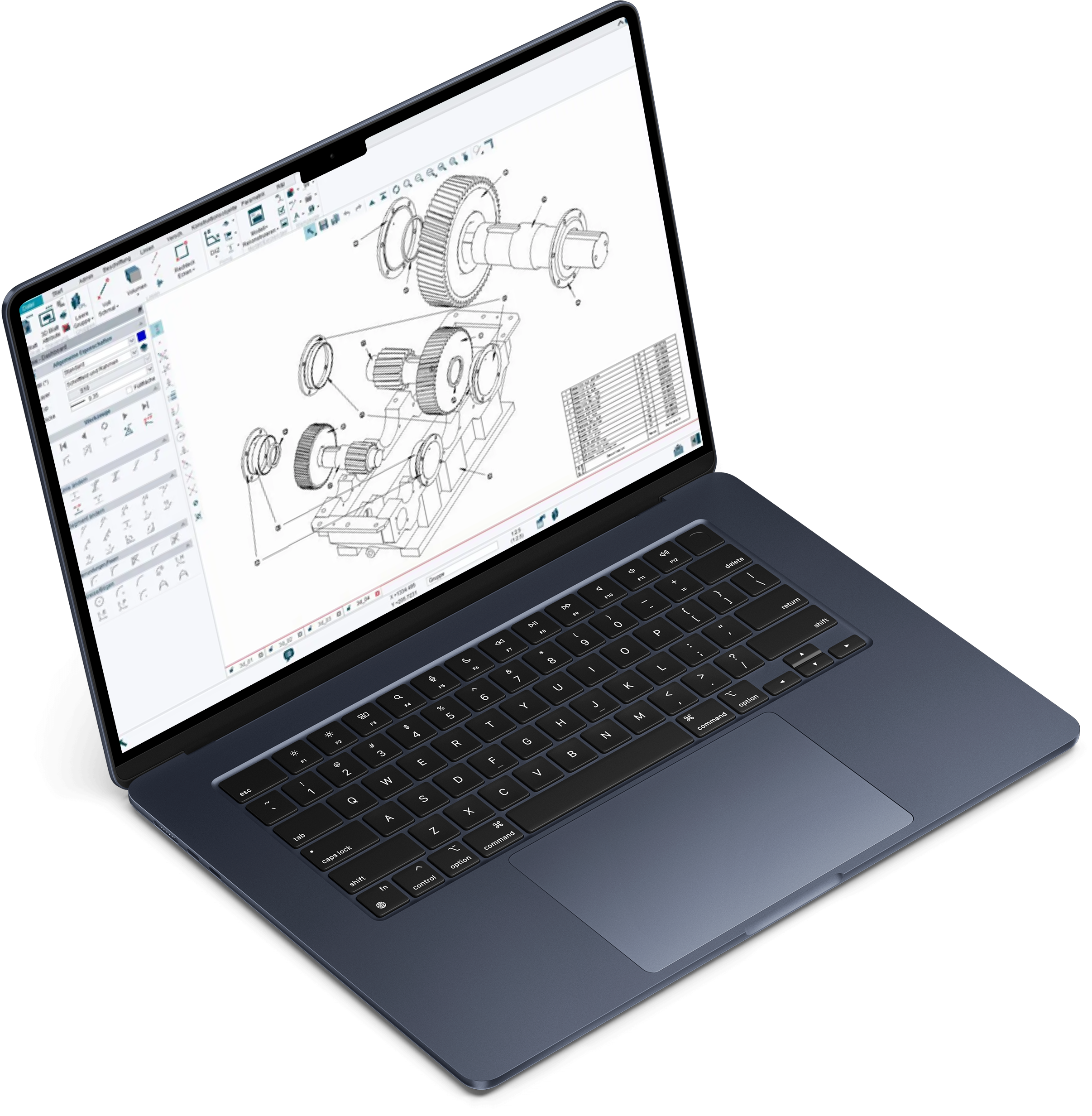
In addition, the client received:
A validated set of technology options for introducing web-based CAD capabilities, supported by practical experimentation and industry analysis.
Clear visibility into architectural dependencies and constraints affecting browser-based and hybrid solutions.
Reduced uncertainty around digital transformation decisions, allowing strategic planning without impacting existing products or customers.
The opportunity to proceed with technical implementation of selected approaches in close collaboration with our engineering team, ensuring continuity from research to execution and minimizing transition risks.
Value Delivered by devPulse
Strategic clarity for digital transformation

Provided a structured, evidence-based view of how the client’s CAD platform can evolve toward web and hybrid models, reducing ambiguity in long-term product decisions.
Risk reduction through targeted R&D
Identified technical constraints, architectural risks, and non-viable paths early, preventing costly experimentation and misaligned investments.
Technology options grounded in real feasibility
Evaluated multiple implementation approaches based on practical experimentation and industry benchmarks, enabling informed comparison rather than theoretical assumptions.
Architecture-level decision support
Delivered clear insights into system-level implications, dependencies, and trade-offs, supporting executive and technical stakeholders alike.
Enabled a smooth transition from R&D findings to potential implementation by offering direct collaboration with the same engineering team that conducted the research.
Established a trusted technical partnership model, combining deep domain understanding with hands-on expertise to support future product evolution.
